An UX/UI Product Design Case Study on Concept, Engagement, and
Problem-Solving Through User Testing & Iteration.
Project Goal
To identify, design and develop a viable digital product opportunity that could generate revenue while providing an engaging user experience.
My Role
UX/UI Designer, Illustrator & Game Developer. As the sole creator of Taverns & Quests, I led every aspect of the game’s development, including:
• Research, Ideation & UX/UI Design – Conceptualised the game, created wireframes, and designed the full user experience and interface.
• Custom Illustration & Art Direction – Created all original artwork to ensure a unique visual identity.
• Prototyping & User Testing – Built interactive prototypes, conducted user testing, and iterated based on feedback.
• Game Development & Design – Coded the game in C# using Unity and implemented core game design principles such as gameplay loops, player goals, challenges, and rewards to enhance engagement.
• Publishing & Launch – Optimised functionality and successfully launched on the Google Play Store.
Challenges and Limitations
This project was a personal initiative designed to challenge myself, refine my user experience and product design skills, and gain hands-on experience in creating a digital product from concept to launch. Key limitations included:
• Time Constraints – Developed after hours while managing other responsibilities, requiring efficient time management and prioritisation.
• No Budget – All design, development, and marketing efforts had to be executed using free tools and self-taught methods.
• Thrown In Deep End – Took on the full end-to-end process, requiring rapid up skilling in UX research, interaction design, game mechanics, and monetisation strategies.
• Solo Development – With no team or external resources, I had to wear multiple hats, handling everything from ideation to launch independently.
Finding the Right Digital Product Opportunity Through Research
When deciding on a digital product to develop, I began by researching industries with high growth potential. My goal was to create a product that was not only engaging for users but also had strong monetisation opportunities.
Through my research, I discovered that the gaming industry is larger than both the music and film industries combined, generating approximately $188 billion in revenue in 2023, compared to $118 billion from the film and music sectors combined (Times of India, 2024). In fact, reports show that the gaming industry's value has surpassed £141.7 billion ($184 billion), outpacing both industries significantly (Marketing Beat, 2024). Seeing the scale of this market, I recognised that creating a mobile game could provide a strong opportunity.
Additionally, I found that free-to-play (F2P) games dominate the mobile gaming sector, contributing over 78% of total game revenue today, with projections estimating that this figure will rise to 95% by 2025 (Edvice.pro, 2024). Unlike traditional premium games, which rely on one-time purchases, F2P games can continuously generate income through ads and in-app purchases, allowing for a sustained revenue model (Research Portal Tuni, 2024).
Recognising the potential of this model, I decided to create a free-to-play mobile game that could engage players while also incorporating strategic monetisation mechanics.
My goal was to design an experience that would encourage retention, driving both engagement and revenue opportunities.
Inspiration & Ideation
Once I identified mobile gaming as a strong digital product opportunity, I focused on finding a compelling gameplay concept that would stand out in a crowded market. I drew inspiration from gamification mechanics in non-gaming apps, particularly Tinder’s swiping interaction, (which had disrupted and completely transformed the online dating industry by making the process feel like a game). As I was on Tinder myself at the time, I realised I was enjoying swiping left or right with the potential of an unexpected pop-up happening (if I match with someone), more than actually meeting someone to date! This led me to ask: "How could I apply this swiping mechanic to a mobile game that provides both strategy and entertainment?"
Around this time, I also saw a YouTube influencer playing an indie tavern-management game.
I noted how the influencer playing the game enjoyed the fresh theme, but complained about the lack of compelling visuals and story elements. I loved the concept of running a tavern, but I saw opportunities to enhance the visual style and gameplay depth through bringing in fantasy elements. As a long-time fan of fantasy settings, I knew there was a strong market for fantasy-themed games which research also backs (The Role of Fantasy Games in Pop-culture and Media).
This led to the core idea: "A fantasy tavern management game where players swipe left or right to admit or reject customers, earning gold and growing their establishment, with unexpected pop-up interactions occurring to enhance excitement".
To quickly validate whether this concept resonated with others, I applied hallway testing, a quick and informal UX research method where initial feedback is gathered from people nearby. I discussed my game idea with my housemate explaining this core mechanic. His enthusiastic response reinforced that the concept had intrinsic appeal, confirming that the idea was worth further exploration and development.
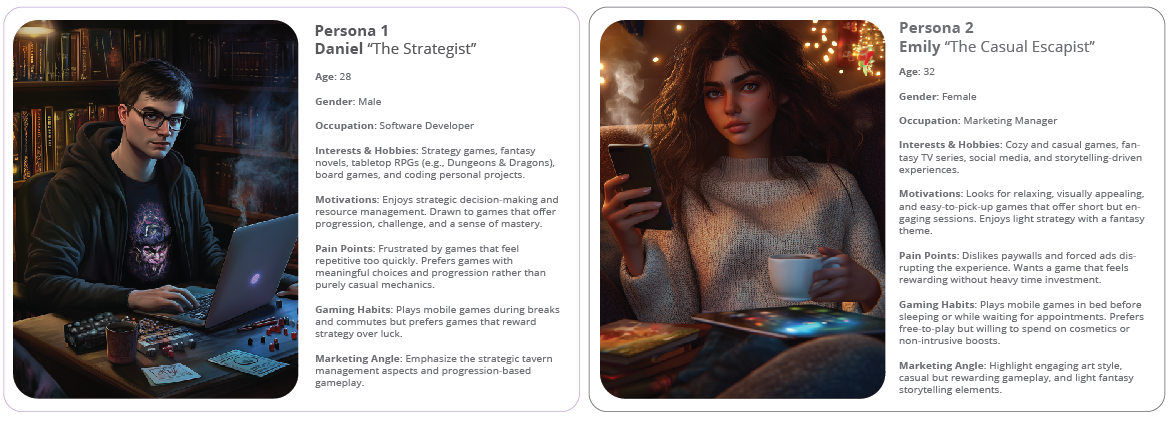
With this early validation, I moved forward with researching the ideal target audience and demographics, creating personas from the research, to guide and inform the game's design, (and marketing decisions) down the line.
Target Audience
Primary Audience:
"Casual Mobile Gamers"Casual gamers who enjoy short, engaging gameplay sessions on mobile devices. They appreciate simple mechanics with depth, allowing for strategic decision-making without overwhelming complexity.
Behaviour & Interests:
• Enjoy casual management games, decision-based gameplay, and light strategy.
• Prefer mobile games they can play in short bursts (e.g., during commutes, breaks).
• Likely to engage with free-to-play models but prefer optional ads/in-app purchases rather than forced monetisation.
Examples of Games They Play:
• Reigns (Swipe-based decision-making)
• Tavern Master (Fantasy tavern management)
• Idle Inn Empire (Casual simulation with progression)
Secondary Audience:
"Fantasy & Role-Playing Enthusiasts"
Players drawn to fantasy settings, immersive worlds, and character-driven gameplay.
Behaviour & Interests:
• Enjoy fantasy media, including books, movies, and RPGs.
• Appreciate unique art styles and world-building elements.
• Likely to be engaged by story-driven mechanics or interactive character decisions.
Examples of Games They Play:
• Hearthstone (Fantasy-themed strategy)
• Graveyard Keeper (Management with storytelling elements)
Demographics Overview
Based on industry trends, Taverns & Quests is expected to attract a diverse audience of casual mobile gamers with a preference for fantasy themes, strategic decision-making, and engaging progression mechanics.
Primary Audience:
Casual Mobile Gamers (65%)
• Gender Split: 55% Male / 45% Female
• Age Range: 18-34 (75%)
Key Interests:
Short, engaging gameplay, decision-making mechanics, light strategy, mobile gaming during downtime.
Marketing Focus:
Promote the game’s fun, quick decision-making gameplay for mobile sessions.
Highlight free-to-play accessibility and optional monetization.
Secondary Audience:
Fantasy & Role-Playing Enthusiasts (35%)
• Gender Split: 70% Male / 30% Female
• Age Range: 18-44 (80%)
Key Interests:
Fantasy storytelling (role playing games like DnD), RPG mechanics, immersive world-building, artistic appeal.
Marketing Focus:
Emphasise unique fantasy setting and handcrafted artwork. Leverage influencers in RPG & fantasy gaming communities for promotion.
Analysing the Data and Creating Persona Cards:
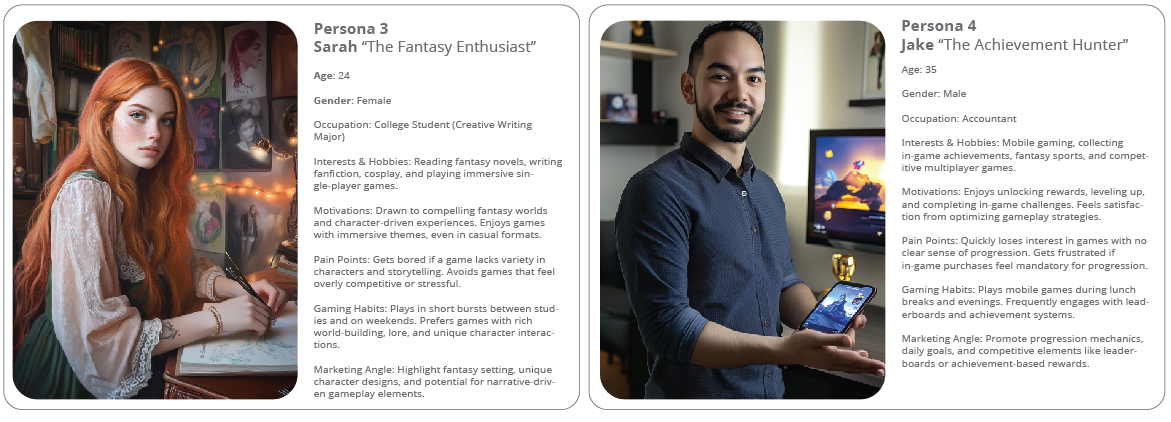
With this in mind I moved forward with sketching initial wireframes and planning the core user experience, ensuring that the swiping mechanic felt intuitive, rewarding, and engaging.
My focus was to conceptualise and design a Minimum Viable Product (MVP) so that I can prototype and test the core idea with users.
Initial rough sketches of conceptualising game play user experience:
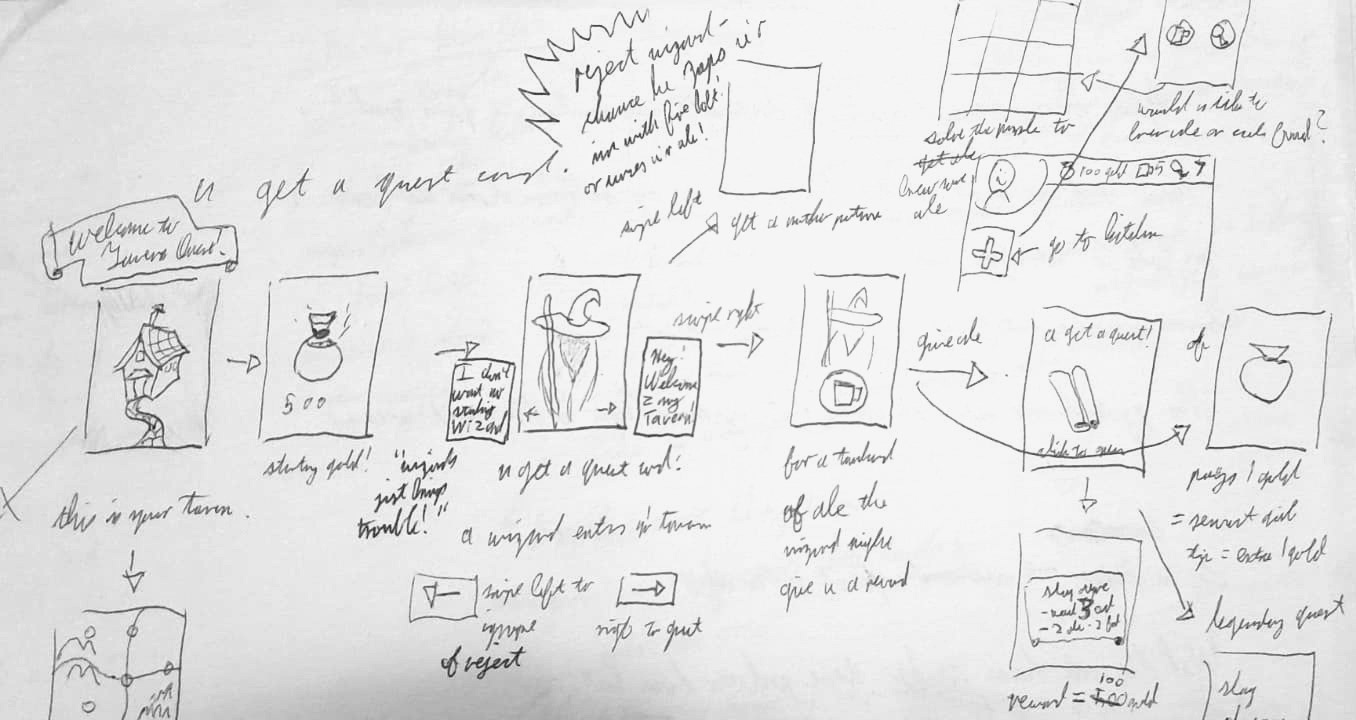
Brainstorming the User Experience of the Minimum Viable Product (MVP) for Prototyping for User Testing:
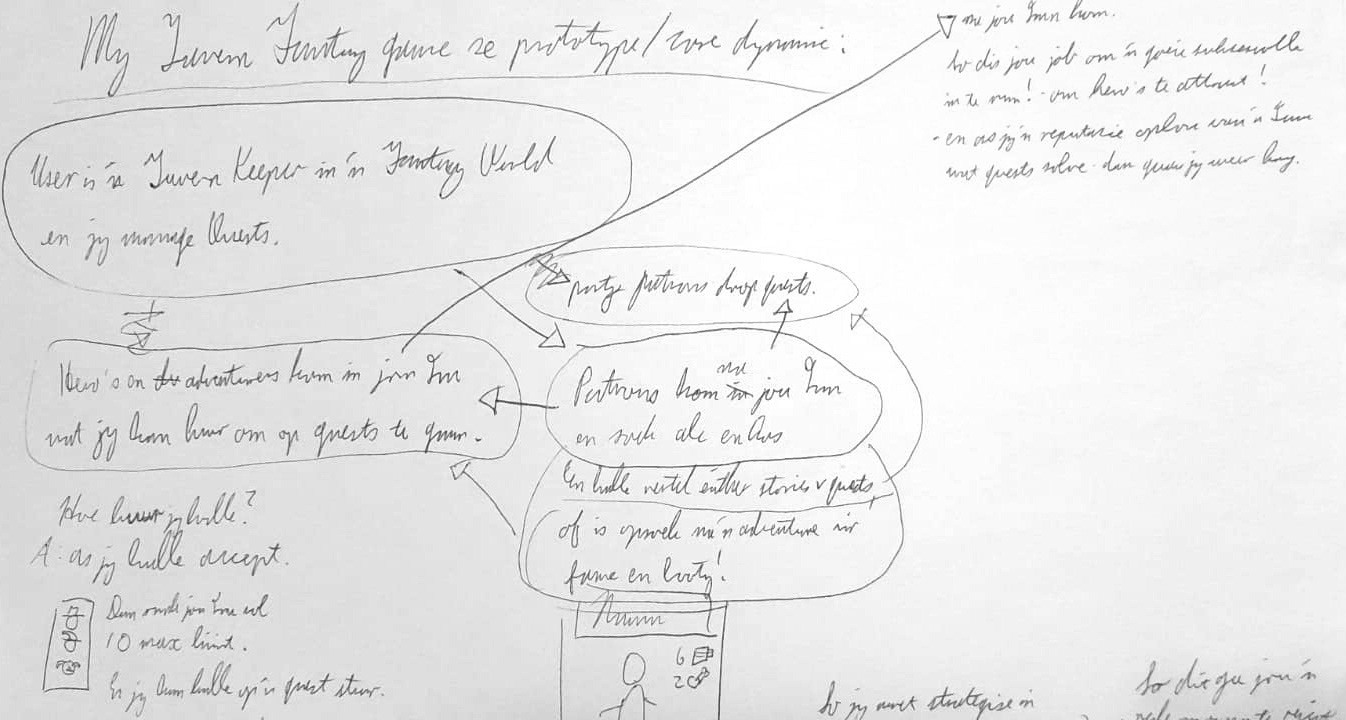
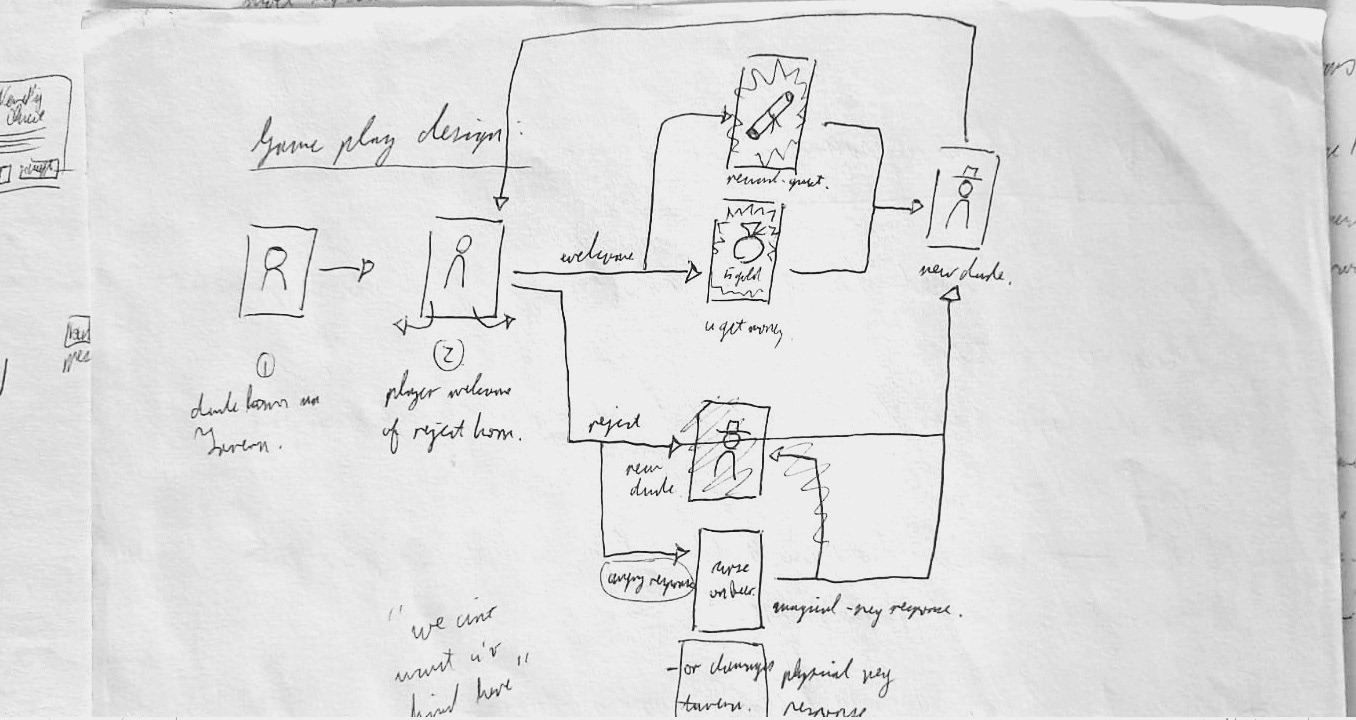
I used pen and paper to quickly sketch and plan User Journeys of MVP:
I used Adobe XD to better visualise and refine these User Journeys:
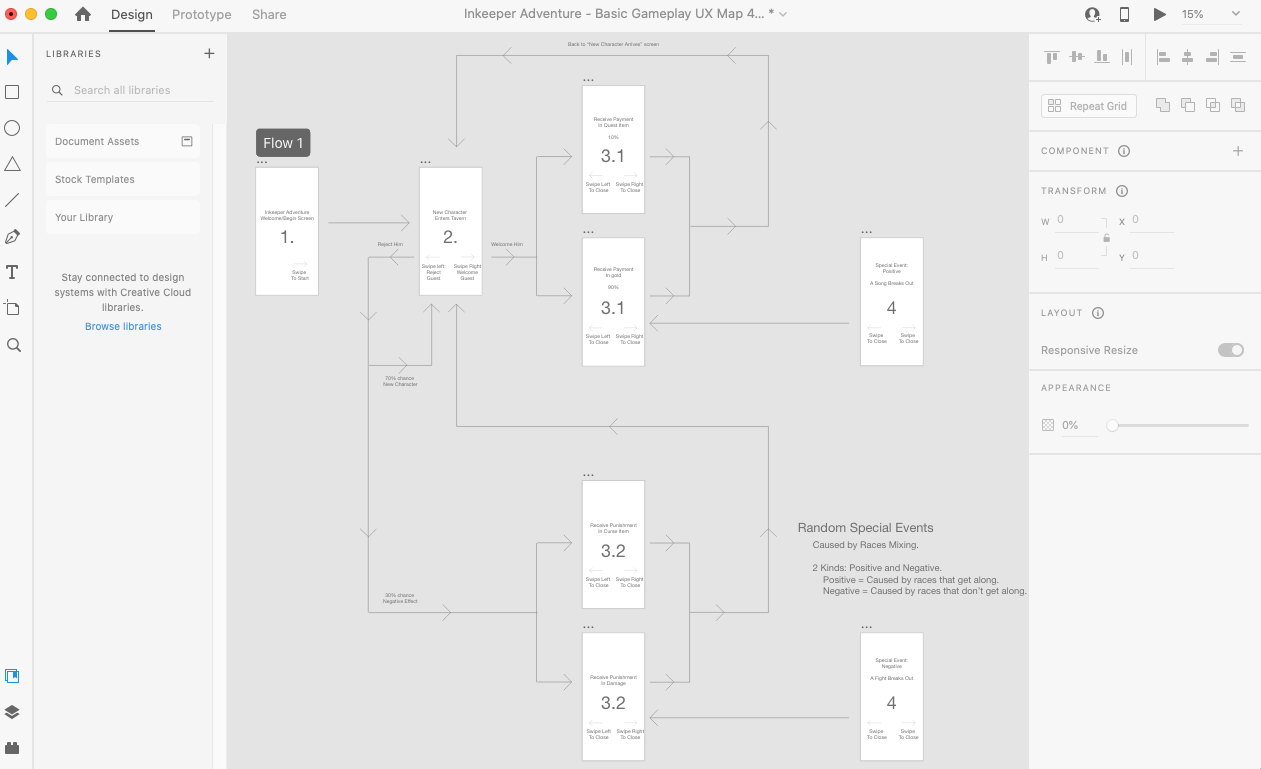
Planning with rough sketched wire frames and mapping out the user journey enabled me to prototype these ideas for ad-hoc hallway user testing to quickly validate and identify what's working and what's not. This allowed me to trim the base game play down even more, to the very core of the MVP prototype:
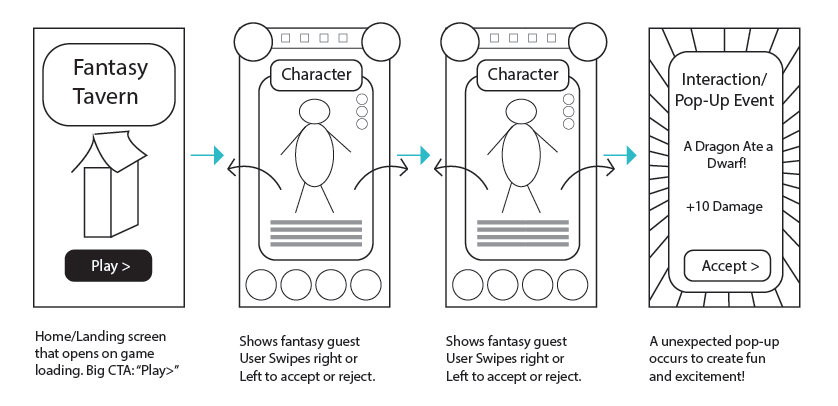
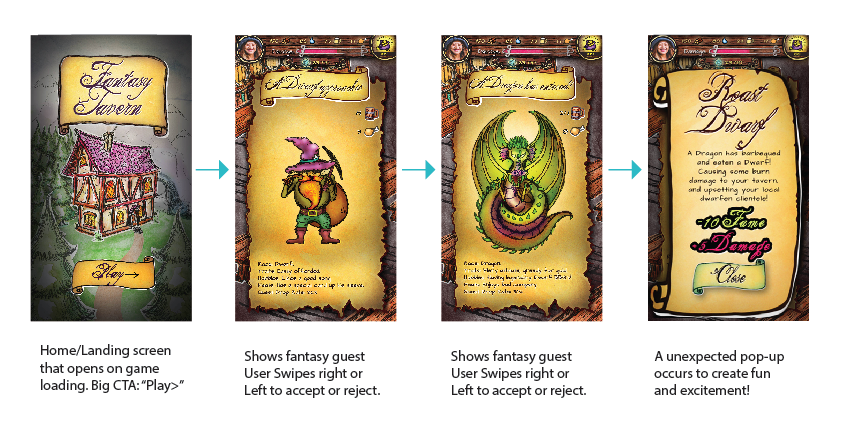
User opens app > clicks play > swipes on character > fun pop-up happens.
From the refining process mentioned above, I rendered low fidelity wireframes and the updated user journey, to guide and inform the design of the high fidelity user interface to build a workable prototype from.
Low fidelity wireframes of adjusted user journey for MVP:
High fidelity wireframes for prototype and testing of MVP:
User Testing: Evaluating the MVP Prototype
To validate the initial concept and identify potential usability issues, I conducted a in-person observational user testing (user lab testing) session with five participants who fell under the target audience. The goal was to collect qualitative data for validation on this one aspect: do people have fun with the core game play loop?
Each participant was given the minimum viable product (MVP) prototype and asked to play freely while I observed their interactions, noted pain points, and gathered qualitative feedback.
Results & key insights from the testing:
• People had fun! – First and foremost every person in the group stated that they did indeed have fun!
• Engagement & Mechanics – Participants found the swiping mechanic intuitive and enjoyable, reinforcing its potential as a core gameplay loop.
• Challenge & Progression – Participants felt the game lacked clear progression and wanted a stronger sense of challenge or achievement.
• Visual & UI Feedback – Participants liked the unique art style but suggested refinements to improve readability and UI clarity.
These findings helped shape the next iteration of Taverns & Quests, leading to adjustments in game balance, UI refinements, and enhanced player progression mechanics.
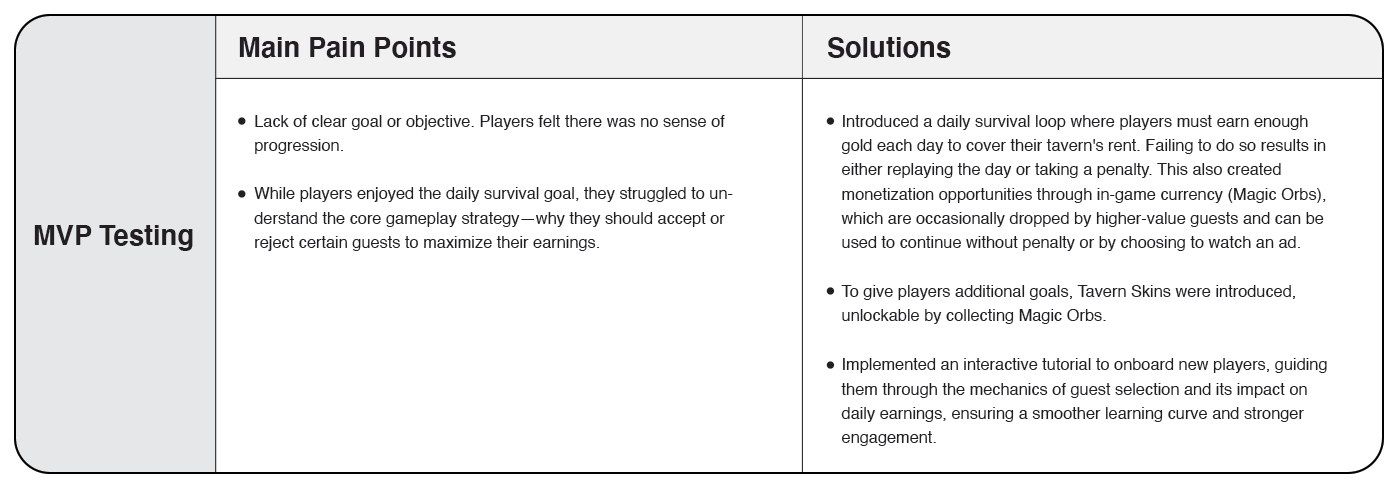
Summary of MVP testing phase: main pain points and solutions:
Iteration & Refinements: Implementing User Feedback
The main pain point from testers was the need for clearer progression and a goal to work towards.
Solution: Introduced a daily survival loop where players must earn enough gold each day to cover their tavern's rent. Failing to do so results in either replaying the day or taking a penalty. This also created monetisation opportunities through in-game currency (Magic Orbs), which are occasionally dropped by higher-value guests and can be used to continue without penalty or by choosing to watch an ad (also introduced in-app purchases for players to buy Magic Orbs).
To implement this, I designed these ideas into the new user journey with low fidelity wireframes:
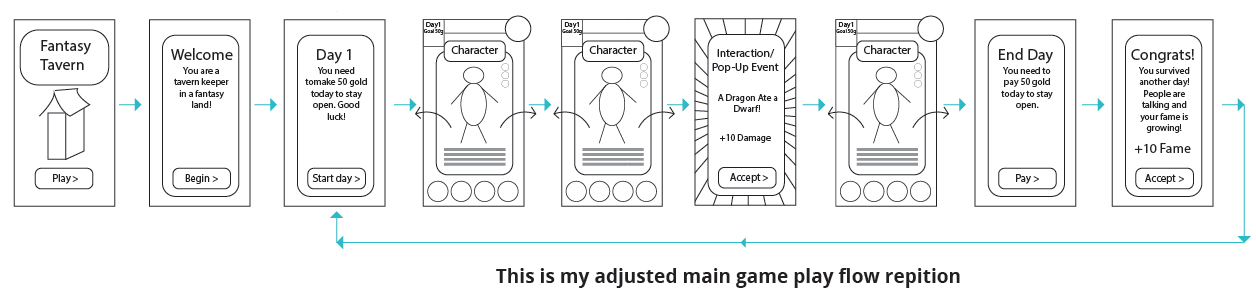
Adjusted User Journey:
User opens app > clicks play > welcome message communicates the goal (make enough gold to stay open every day) > Clicks begin > message informs player of the amount of gold needed to survive that day > Clicks Start > swipes on guest > fun pop-up happens > keep swiping on guests > random event can occur for excitement > day ends > player pays their rent and are rewarded > next day begins with higher rent required > loop starts again.
This introduced:
• Short-term game-play goal that loops – Each game session became a "day" in the tavern, requiring players to reach a specific gold target before closing.
• Strategic Swiping & Decision-Making – Players had to manage customers efficiently, balancing risk and reward to meet the day's quota. Players can also choose to spend gold to buy more "tables" giving them more space in the tavern, which results in more opportunity to make enough gold before the end of the day.
• Unexpected Events – Random pop-up events were introduced to keep gameplay dynamic and engaging.
• Reward System – Successfully completing a day’s goal rewarded players with bonuses and potential tavern upgrades, reinforcing long-term engagement.
By implementing this short-term, goal-driven gameplay loop, I ensured that players had a clear, engaging challenge each session, introducing a sense of progression, while maintaining the game's core swiping mechanic.
Prototype Testing & Refinements
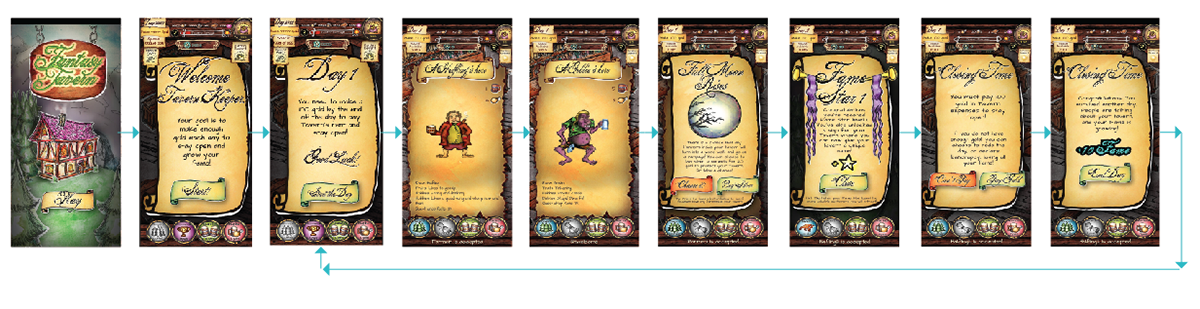
After refining the new gameplay loop with low-fidelity wireframes, I developed high-fidelity wireframes to prototype the updated experience and conducted another round of observational user testing.
Results & key insights from the testing
The feedback was positive! This confirmed that the addition of daily profit goals and progression improved engagement.
Closed Alpha Testing on Play Store
With this validation, I proceeded with a closed alpha test on the Play Store with 10 users. This allowed me to gather feedback on real-world performance across different devices.
Results & Key findings from this phase included
Overall, the feedback was overwhelmingly positive, validating the core gameplay while providing actionable insights for further improvements and taking the project to the next stage. Specific findings include:
• Bugs & Device-Specific Issues – Some images failed to render correctly on certain phone models, highlighting compatibility challenges.
• UI & Usability Improvements – Testers suggested minor UI refinements for better readability and accessibility.
• Tutorial Implementation – Players found the mechanics unclear at first, leading to the suggestion of adding a short tutorial to onboard new users.
After addressing these pain-points it was time to move on to the next phase:
Open Beta Testing & Real-World User Feedback
After implementing bug fixes, UI refinements, and tutorial improvements, I launched Taverns & Quests on the Google Play Store to gather broader remote qualitative user feedback from real world users. Since the game was still in its testing and iteration phase, I opted not to market it yet, relying on organic downloads to drive initial insights.
Key Findings from Public Feedback:
As new users began downloading and playing the game, I received a wider range of feedback that highlighted additional areas for improvement:
• Poor UX with Connectivity Issues – A user reported a poor experience when losing internet connection, bringing attention to a lack of proper offline handling. This was an oversight I hadn’t fully considered before, making it a crucial finding from the feedback.
• Monetisation Frustrations – A player stated that while they enjoyed the casual swiping mechanics and tavern management, they felt that the game forced them to watch ads to progress. Although was not an intentional design choice, it revealed how the current ad implementation strategy negatively impacted the user experience. They suggested adding more ways to progress without relying on ad.
• Art & Visual Design Praise – Several players praised the game’s unique and hand-crafted art style, reinforcing that the visual identity was a strong point of the experience.
• Gameplay Depth Concerns – Some critical feedback described the game as repetitive, with one user stating it as: "nothing more than a boring Tinder." While the initial gameplay loop of surviving a day was engaging, players found that around the in-game "day 3", the experience became monotonous. This shows quite an early drop off in retention (around 10 minutes into playing).
Summary of Open Beta testing phase: main pain points and solutions:
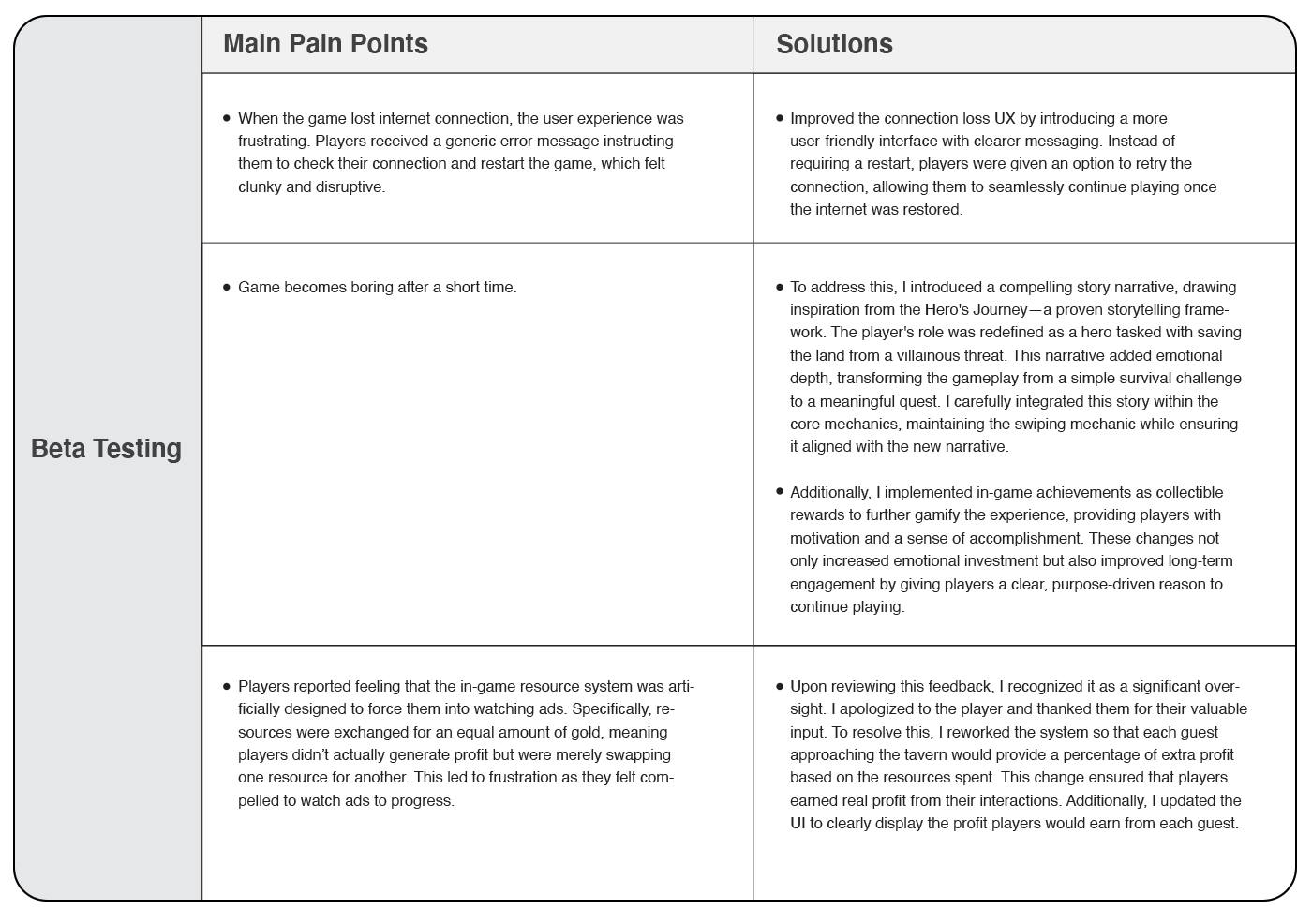
My biggest take-away from initial feedback was to focus on enhancing player retention.
Solution:
Enhancing Retention Through Narrative Driven UX.
Engagement & Retention Drop-Off - Initial player feedback highlighted a significant issue: while the game's swipe-based decision mechanics were engaging, players lacked long-term motivation to continue playing. Analysis of user session data and qualitative feedback revealed that retention rates dropped quickly after a few play sessions, with players describing the experience as "repetitive" or "boring." This indicated a breakdown in sustained engagement and intrinsic motivation—key elements in player retention.
Solution:
Understanding Motivational Game Design - To address this, I conducted comparative research across multiple entertainment media (games, literature, and film) to understand how long-form engagement is achieved. This led me to proven narrative-driven principles, particularly The Hero’s Journey framework, commonly used in storytelling to create emotional investment. By analysing how story progression influences audience engagement, I identified that players needed a stronger personal connection to their role in the game beyond just optimising their tavern.
To enhance player autonomy and emotional engagement, I iterated on the core gameplay loop by shifting the player’s motivation from a purely business-driven management experience to a character-driven narrative progression. This aligned with Self-Determination Theory (SDT), which emphasises that engagement improves when users feel a sense of autonomy (meaningful choices), competence (measurable progress), relatedness (connection to characters) and purpose.
My solution was to introduce a compelling narrative framework inspired by the Hero’s Journey, giving players a clear call to adventure and a villain to oppose. Instead of simply running a profitable tavern, players now take on the role of a hero, using their tavern to push back the Dark Lord’s encroaching darkness. By keeping their tavern open and making strategic choices, players actively protect the land and its people, making their decisions feel more meaningful.
This narrative shift enhances engagement by providing a direct emotional stake in the world, reinforcing player agency through strategic swiping mechanics that influence the balance of hope and darkness.
Key UX changes included:
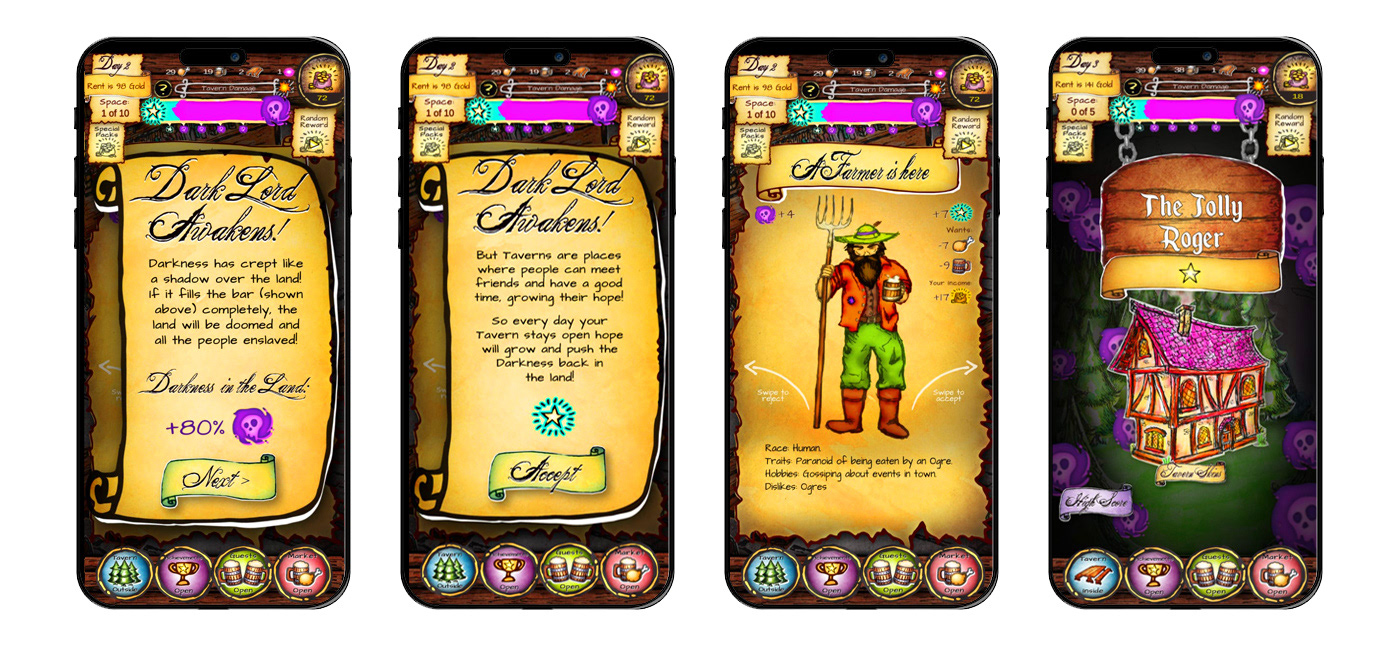
• Story-driven progression - After the tutorial, a new event triggers on Day 2, revealing that the Dark Lord has awakened, threatening to enslave the land with darkness.
• New visual storytelling UI - Introduced a unique Dark Lord icon (a purple flaming skull) that symbolises the darkness without being too scary, keeping within the game's art style.
• Hope vs. Darkness mechanic - Swiping mechanics now impact the Darkness Bar—letting guests in increases hope (pushing darkness back), while rejecting them increases darkness.
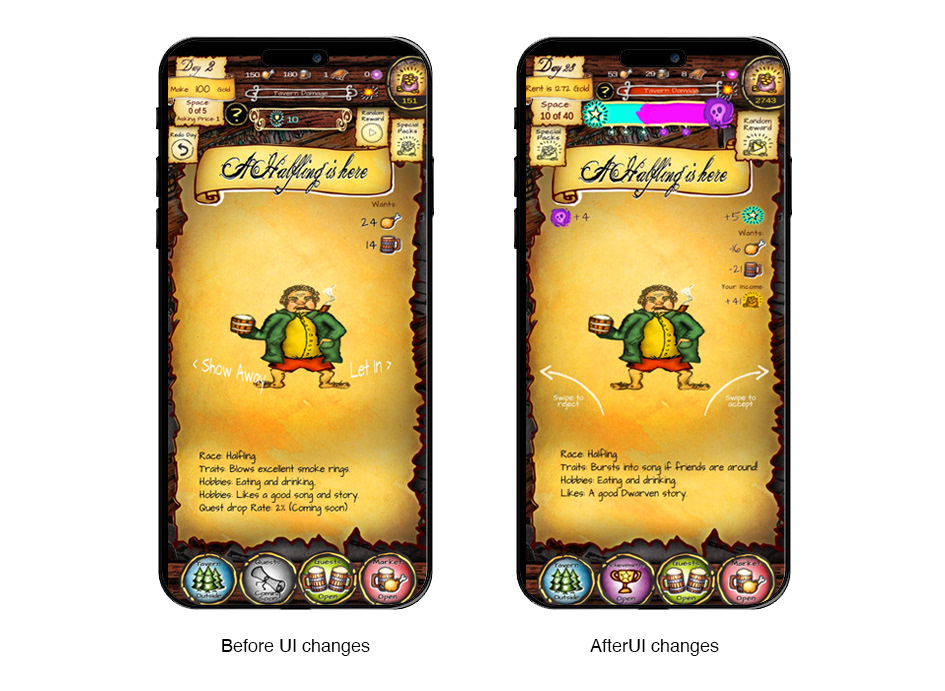
• Prominent Darkness Bar UI - Added a large visual indicator at the top of the screen, to clearly show the player their direct engagement with the villian: every swipe, every day survived impacts the narrative.
• Core Game Play Loop Adjusted - Successfully keeping their tavern open each day now rewards the player with hope, that pushes back the darkness. However, at the start of each new day, the Dark Lord retaliates by spreading more darkness overnight.
• Immersive event-based tutorial - Pop-ups explain the new mechanics clearly, guiding players into the new strategic goal of keeping the tavern open to fight the Dark Lord’s influence.
This solution establishes a dynamic struggle, where players must consistently grow hope through swiping choices and completing the short-term gameplay loop of keeping their tavern open every day, to outpace the villain’s influence.
Planning the narrative update and adjusted user journey with low fidelity wireframes:
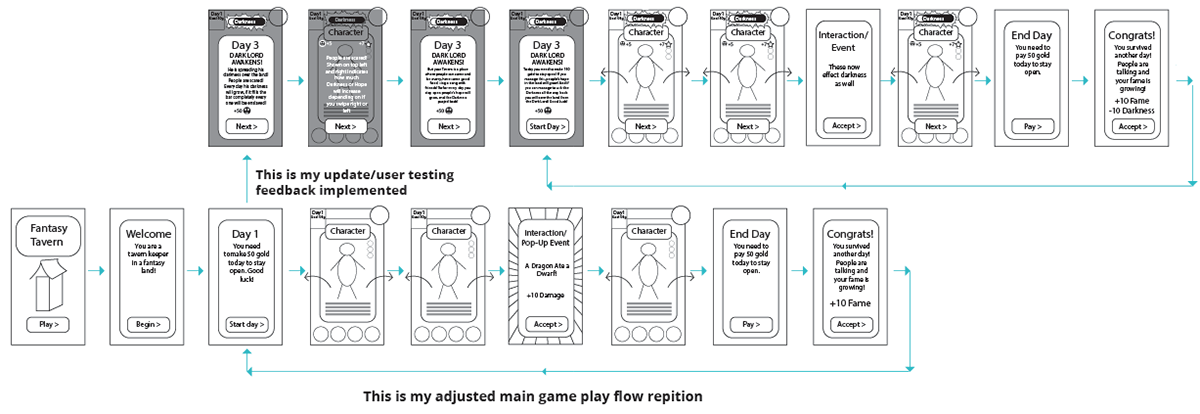
Example of UI design of the Narrative Update:
Example of UI changes before and after Narrative update:
User Testing & Iteration
To validate these changes, I conducted closed alpha testing on these changes with a small group of target players, iterating based on qualitative feedback to refine the new story-driven mechanics.
Key Findings & pain-points:
• Positive Reception - Testers responded well to the introduction of the Dark Lord narrative and the evolving Hope vs. Darkness mechanic, finding it engaging and thematically immersive.
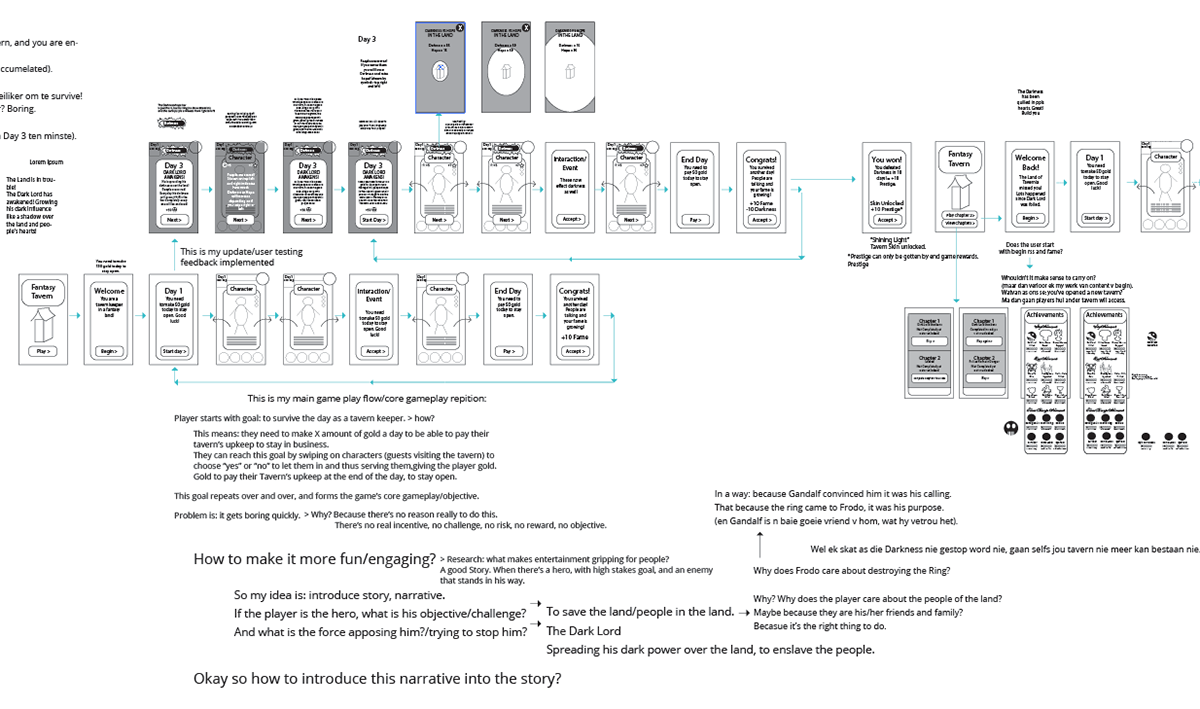
• Initial Game Ending Issue - With this update I thought it makes sense to give the game a definitive ending when the player fully pushed back the darkness and thus overcame the villain. But testers found this unsatisfying, as they wanted to continue playing and using the in-game currency they had accumulated.
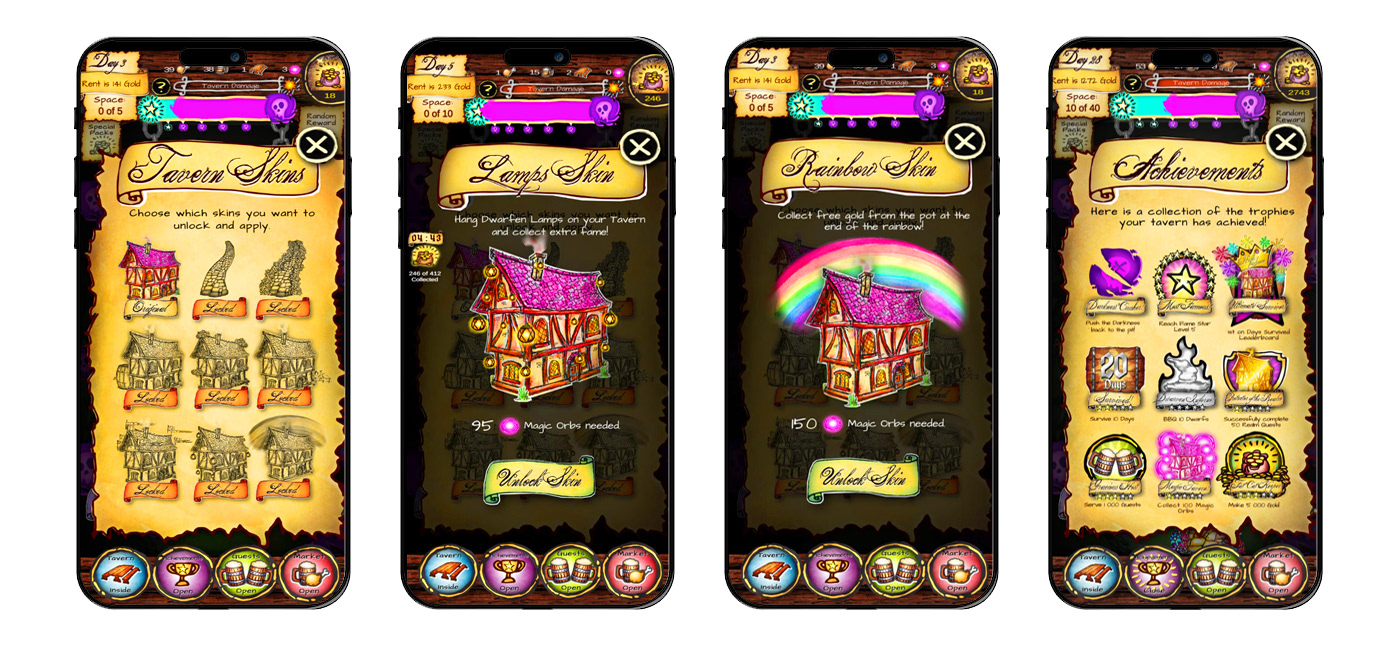
• Adding Collectables - Participants suggested adding more skins and achievements to currency unlock as she really enjoys collecting items in mobile games.
Solution
• Open-Ended Progression - I iterated on this by making the Hope vs. Darkness struggle an ongoing challenge rather than a finite endpoint. Now, when players push back the darkness completely, they receive a celebratory reward, but after a period, the Dark Lord returns with new schemes—creating an ongoing narrative cycle that keeps the game fresh. This was well received upon testing again.
• Introducing Mid-Tier Goals: Mini-Quests - With the removal of the end-game, one of my testers gave feedback that they liked how the game had a definite bigger goal that they could achieve and be rewarded for, and now feel that is missing with changing to the open ended version. Although they like that they can carry on playing. To address this I introduced a mid-tier gameplay loop, where I implemented a story-driven mini-quest system that integrate seamlessly with the core swiping mechanic.
For example: Stopping troll attacks, rescuing kidnapped royals, or preventing dragon raids by fulfilling in-game challenges. Testing this feature was met with approval, and suggestions of making them "time-limited challenges" to add urgency and excitement. These quests add variety and engagement working in tandem with the already established swiping core gameplay.
Screenshot of the planning process of the updates:
Collectables added
I worked hard to create unique and interesting tavern skins and in-game incremental achievements, that would enhance the gameplay and enjoyment. This is a proven mobile engagement feature, to provide continuous player progression incentives.
Showcase of collectables designed:
Final Closed Testing & Polish
These refinements were rigorously tested within my small closed group to eliminate bugs and optimize the experience before preparing for a wider-scale player test.
Impact of Narrative Update on Player Engagement
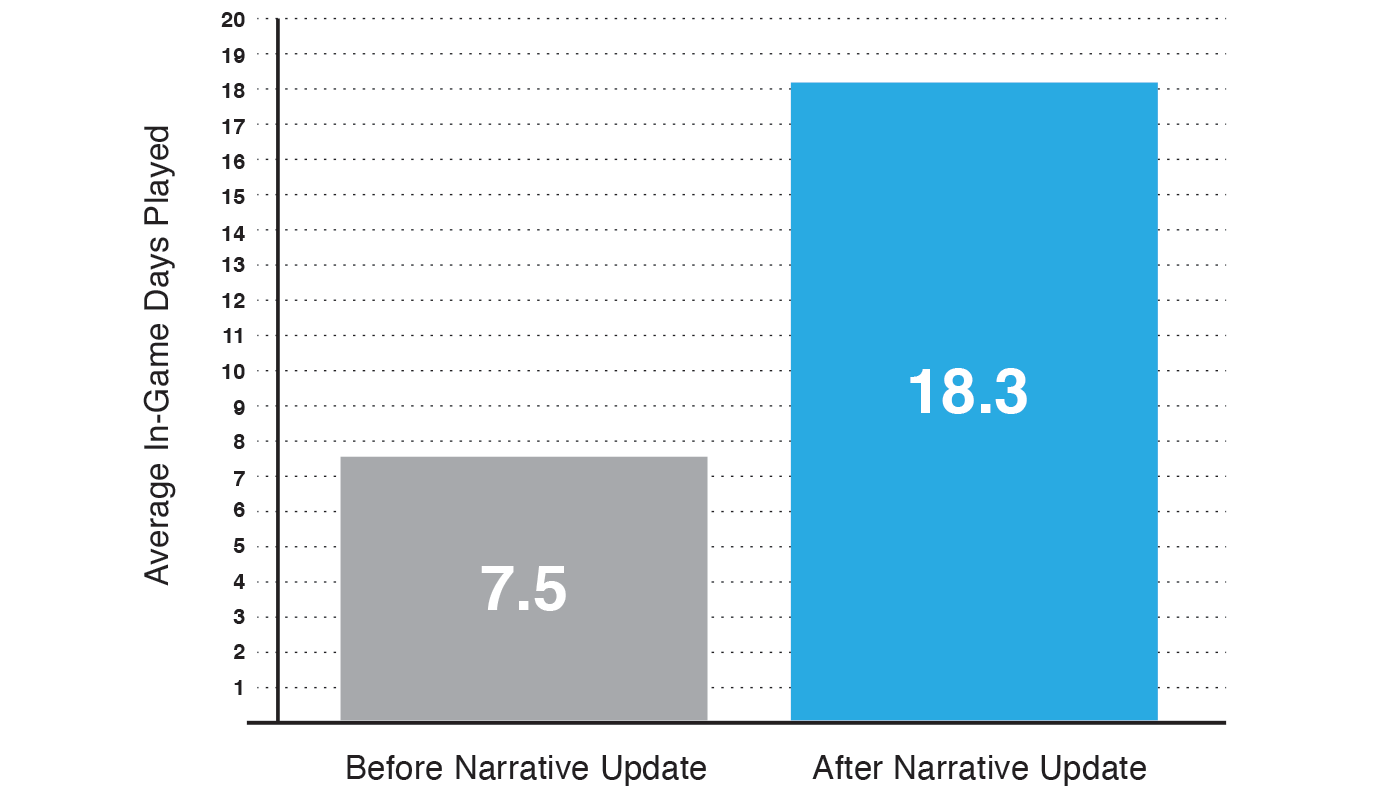
Testing result with me small closed alpha testing sample showed a clear increase in engagement, as measured by in-game days survived. On average, playtime increased from 7-8 in-game days to approximately 18 days, demonstrating a stronger player investment in the experience.
Next Steps – Scaling Up Play testing
The next steps is to test these updates with a larger audience. Since organic installs have slowed down by now, to achieve this, I plan to:
• Leverage gaming communities & forums – Posting on Reddit (r/IndieDev, r/gamedev, r/playmygame), Discord groups, and indie game forums to recruit engaged testers.
• Utilize social media & free press channels – Sharing on Twitter, LinkedIn, and game development Facebook groups to attract play testers.
• Engage niche influencers & micro-streamers – Offering early access keys to content creators who focus on indie or mobile gaming.
• Potentially use TestFlight/Google Play Beta – Opening up a beta testing program to gather structured feedback from a broader audience before a wider release.
This stage will be crucial in ensuring that the narrative-driven enhancements drive engagement at scale, providing meaningful insights before engaging a full-scale marketing strategy.
This project began as a personal creative challenge—an opportunity to push my boundaries in design and digital product development. Over time, it became much more than that. Through Taverns & Quests, I discovered a passion for UX design, UI design, and the ideation of engaging digital experiences. I realised that I enjoy problem-solving, crafting intuitive user flows, and the value of iterating based on user feedback to create meaningful engagement.
Beyond technical skills, this project also tested my resilience. I had to forge ahead, jump in the deep end, and learn to swim, navigating everything from programming and game development to player psychology and monetisation. Each challenge reinforced my ability to adapt, iterate, and refine ideas based on real user feedback, a skillset that is at the heart of great UX design.
Incorporating user feedback to iterate and enhance the product has been a fundamental aspect of my approach. UX design is never truly finished; it’s about continuous refinement, responding to user needs, and making a product better with each iteration. This project has been a testament to that mindset.